
Do You Avoid Loneliness with Books and TV?
Is facing yourself in the quiet too much?

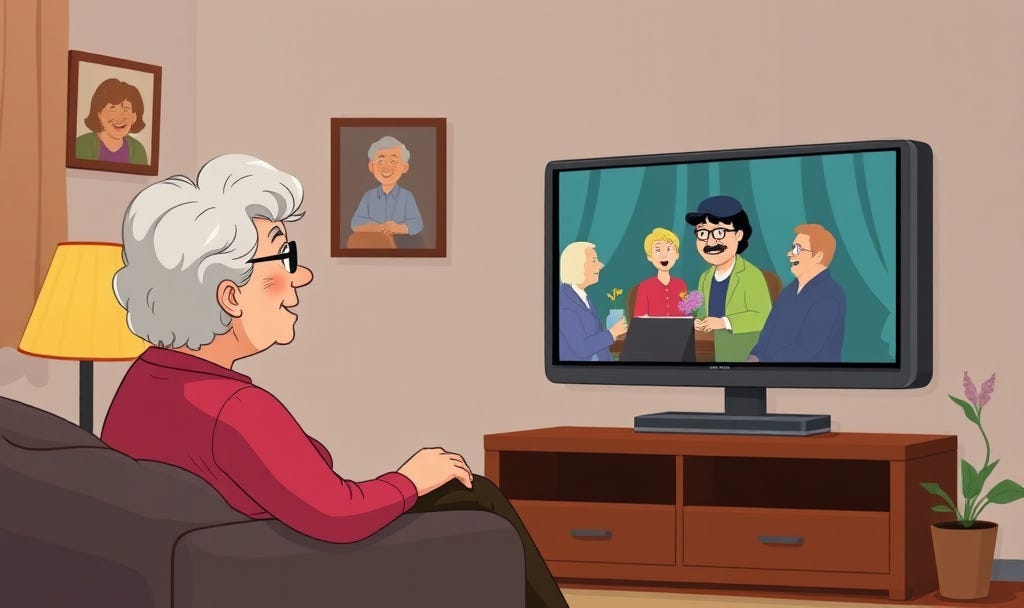
Do you sometimes lose yourself in a fictional character? I do.
I just finished reading the book All the Light We Cannot See by Anthony Doerr. Wow, what a book. It takes place during World War II. I was hiding in the attic with Marie-Laure, blind, starving and jumping at every noise. Were the Germans about to burst into the house and kill me?
I was with Werner, a German soldier, half crazy with guilt and horror at the death and destruction he was helping to cause. I was at the bakery in Saint-Malo picking up loaves of bread with secret codes baked inside and in the grotto where Marie-Laurie stood in the cold water touching the mussels, anemones, and sea snails.
Each of the main characters had people around but was alone and isolated in some way. Marie-Laure was blind. Her Uncle Etienne, suffering PTSD from WWI, holed up in his room for days at a time, beset by hallucinations and horrible memories. Werner, an orphan, was younger and smaller than the other soldiers. Only his skill with radios saved him.
In reading this very long book, I may have been physically alone on my sofa, at my table, or outside in my patio, but I was with each of the characters. I did not feel alone.
I have always been a reader, and I have always taken on the lives and identities of the characters in the books I read. Weird kid that I was, if I was reading about a French person, I pretended I could speak French. If my character was a ballerina, I convinced myself I could dance. I was Nancy Drew, I was Rebecca, I was Scarlett O’Hara, I was Jo in Little Women.
No doubt I will become a character in the next book I read.
Likewise, when I’m writing my Beaver Creek novels about PD Soares and her friends, I totally identify with PD. When she weeps, so do I. Her friends Janey, Dakota, Donovan, and the others, are as real to me as my neighbor who just walked by with his dog—except that I can control what they say and do.
Likewise, I jump into the TV shows I watch, whether I’m Deborah Vance in Hacks, Carrie Bradshaw in Sex and the City, or David Burroughs in the violent series I Will Find You that I just watched on Netflix.
(Burroughs has been in prison for five years for killing his son when his ex-sister-in-law comes upon a photo that shows the boy five years older and very much alive.)
All of these fictional characters become our friends and our alter egos. We take on their companions as our own. We do not feel lonely as long as we are reading or watching, living with our made-up friends. That’s one of the reasons it’s hard to let go when we come to the end of the book or show. We want to stay with these characters. Without them, our own lives may seem empty. We have to face the silent house, the illness, the boredom, or the grief. So, we click on another show or open another book.
Or turn to social media. I’m in love with some of the people who post Facebook reels, even though I have never met them. Unlike real people, they are there for me all the time.
How many of us fall asleep with an open book or Kindle, an audiobook or the TV still on? I know I do. Sleep experts say we need to learn to fall asleep with no noise, no screens. But I get my best sleep in front of the TV. It’s company. It blocks out the noises in my mind. I can relax in that fictional world. Lots of people have the TV or other media on all the time, even if they aren’t really paying attention. It’s just too quiet without something going.
I don’t write with background noise. It’s too distracting. But as soon as I move on to chores or driving or relaxing, I embrace that distraction.
In an article titled, “Is Sleeping With the TV On Good or Bad? What the Science Actually Says,” clinical psychologist Sumi Raghavan, Ph.D., says sleep and anxiety are deeply connected. For a lot of people, the TV isn’t really about entertainment — it’s about avoiding the silence that lets anxious thoughts flood in. The background noise and flickering images act as a distraction from a racing mind.
I have been reading at bedtime since I was a child. Before I go to bed, I often drift off with the TV or radio on. Sometimes, I lie in the quiet and let my mind wander where it will. At other times, I feel as if I can’t relax without a little help from my fictional friends.
These days, when my body is still dealing with illness, whatever helps me to rest is good. If I spent most of Sunday with Marie-Laure and Werner, what does it hurt? If I doze off with The Big Bang Theory, is that so bad?
Let’s Talk
Do you spend hours reading or watching TV? How about listening to podcasts (I adore Terry Gross of Fresh Air)? Do these distractions make you feel less alone? Do they take you away from an uncomfortable reality? Or is it just fun? Do you find it easier to fall asleep with something going?
More to Read
“Mind-Melding With Our Favorite Fictional Characters” | Psychology Today
“Is Sleeping with Your TV On a Bad Idea?”
“Sleeping With TVs On Is Worse Than We Ever Knew”
PS. In 2023, Netflix debuted a mini-series based on All the Light We Cannot See. It’s good, but the book is much better.
PPS. While I was drafting this post after a rough night, I fell deep asleep on the sofa with my computer in my lap. If it sounds like I write these things in my sleep, maybe I do.
How did I end up alone? My first marriage ended in divorce. My second husband died of Alzheimer’s after we had moved to the Oregon coast, far from family. I never had any kids, only dogs and cats. Now I live by myself in a big house in the woods. You can read our story in my memoir, No Way Out of This: Loving a Partner with Alzheimer’s, available at your favorite bookseller.
When I'm exhausted, in the middle of the day, I don't nap. I lay down on the couch in front of the tv, something I've either already seen or don't care much about and in minutes, I'm out. I also never with music or anything else, I prefer the silence. And when I can't have that, because I live with an aging mom and her aides, I put my headphones and on listen to techno. Loudly. It's my white noise. I'm frequently alone, and rarely lonely. I have trouble reading these days because...so exhausted all the time. Two pages and I'm asleep but I know exactly what you mean. When I was reading Jonathan Lethem's Motherless Brooklyn, narrated by Lionel Essrog, a PI with Tourettes, I found myself thinking in Tourettes fashion when I wasn't reading it....
I watch a movie almost every evening. I sit on the sofa and cuddle with my dog. I often fall asleep on my sofa and I sleep surprisingly well, given that my 90 pound dog takes up a lot of space! I often am surprised to wake up at 6 am with the TV and lights still on! So I brush my teeth, take my evening meds at 6 am, and go up to bed for real and sleep a few more hours. Not ideal for sleep, but the movies and dog are so comforting.
BTW, I recently watched "DTF St. Louis" on Prime. DTF is a dating app for married people. You'd expect it to be superficial, but it's really about complex relationships between 3 people who care about each other. Much of it focuses on a wonderful close, platonic friendship between 2 straight men (I wish more guys had friends like that!) The acting is fantastic, David Harbour and Jason Bateman in particular. It's written with fantastic character development. It's sort of a murder mystery, too, with a surprise ending. I recommend it highly! (Especially fans of Bateman!)